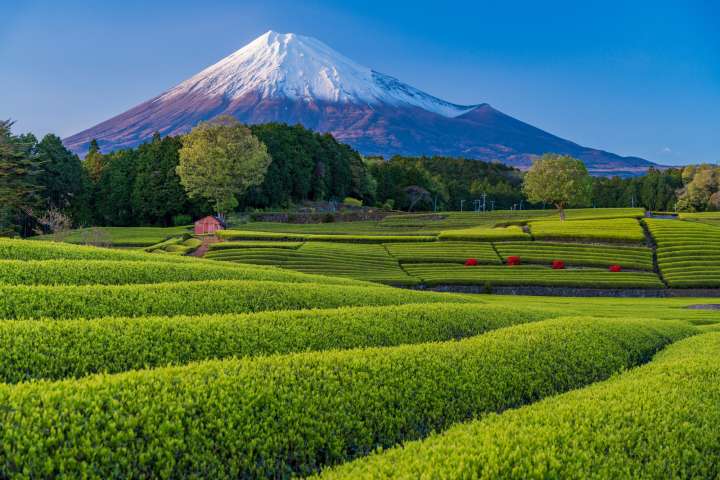

If you're looking for a way to immerse yourself in nature and explore the majestic beauty of Japan, hiking is a perfect option. Japan boasts a variety of hiking trails, from easy paths for beginners to more challenging ones for adventure enthusiasts.
In this article, Min will introduce you to five easy but equally exciting hiking trails for beginners – a great starting point for you to step into the world of nature lovers and explorers!
1. Experience Nature at Daisetsuzan National Park – Hokkaido
Daisetsuzan National Park, located in central Hokkaido, is an ideal destination for mountain and hiking enthusiasts. Known as the "roof of Hokkaido," this area is famous for its impressive high peaks, particularly Mount Asahidake, which stands at 2,291 meters.
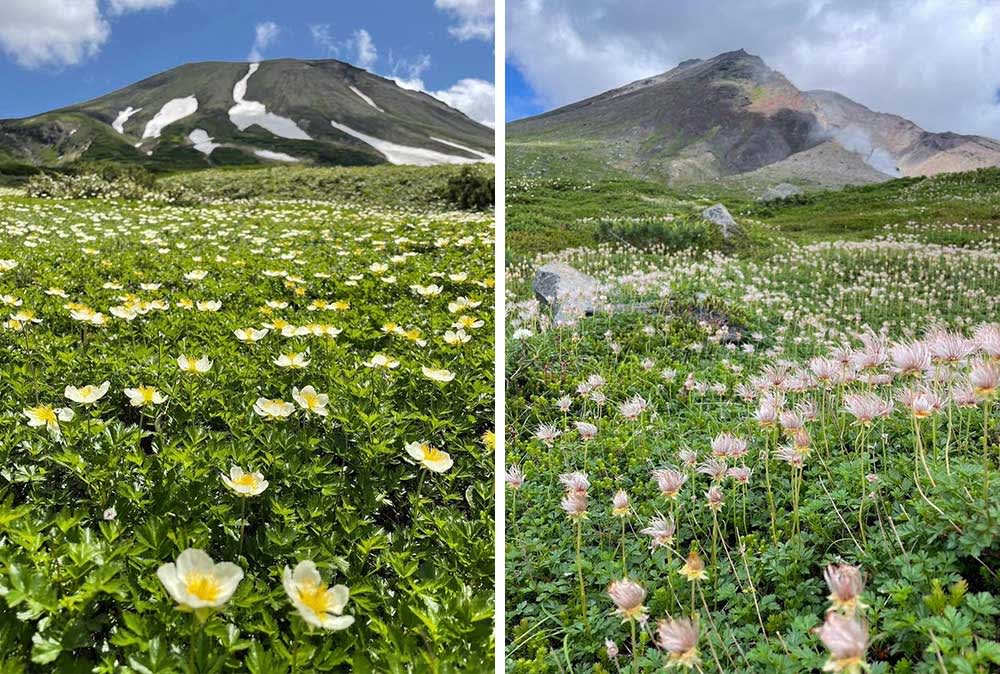
Daisetsuzan offers a variety of hiking trails of different lengths and difficulty levels, catering to all visitors. For beginners, the 1.6 km trail around Sugatami Lake is the most suitable choice. Here, you can enjoy the majestic views of the mountains surrounding the crystal-clear lake and the steam columns rising from volcanic craters, creating a fascinating and mesmerizing natural experience.

The best time to explore Daisetsuzan is from mid-July to the end of September when the weather is cool and pleasant. In summer, you’ll witness vast grasslands and the vibrant colors of rare high-altitude flowers. In autumn, the scenery becomes even more stunning with the red and gold foliage, creating a breathtaking natural landscape

Traveling to Daisetsuzan is also very convenient, as you can easily take a train from Sapporo or Asahikawa city. The Asahidake Visitor Center provides useful information about trails, weather forecasts, and maps to help you prepare for your hike.
Daisetsuzan National Park not only challenges hiking enthusiasts but also offers a fantastic place to immerse yourself in pristine nature and enjoy a peaceful escape from city life.
2. The Historical Nakasendo Trail – Gifu and Nagano Prefectures
In Japanese, "Nakasendo" means "the road through the mountains" and was once one of the five main routes connecting Edo (modern-day Tokyo) to Kyoto, spanning 534 kilometers.
Although much of the original path has disappeared over time, some sections are well-preserved, notably the 8 km stretch between the old towns of Magome-juku (Gifu Prefecture) and Tsumago-juku (Nagano Prefecture), which takes about three hours to complete. This section includes both town paths and forest trails, attracting many hiking enthusiasts with its beautiful scenery and majestic nature.

You can start your journey from Magome-juku (Gifu Prefecture) or from the opposite direction, Tsumago-juku (Nagano Prefecture), but many people prefer starting from Magome-juku as most of the journey is downhill and easier to walk.

Starting from Magome-juku, you can admire traditional wooden houses that have been converted into tea shops, souvenir stores, and other charming stops along the way.

Continuing on, you’ll walk along a cobblestone path through cedar forests, bamboo groves, and mountainous valleys. Along the way, you will also encounter Jizo statues—Buddhist deities who protect travelers. Don’t worry! There are clear and easy-to-understand signs along the path to help you navigate and avoid getting lost

The journey ends at Tsumago-juku, one of the best-preserved post towns in Japan. Don’t forget to enjoy local cuisine at cozy restaurants, visit traditional sake shops, buy souvenirs, or stay overnight at inns to experience the deeper culture of Japan.
3. Hiking Adventure at Mount Takao – Tokyo’s Most Famous Mountain
Mount Takao, standing at 599 meters, is located in western Tokyo and is one of Japan's most famous and easily accessible mountains, just about a 50-minute train ride from central Tokyo.
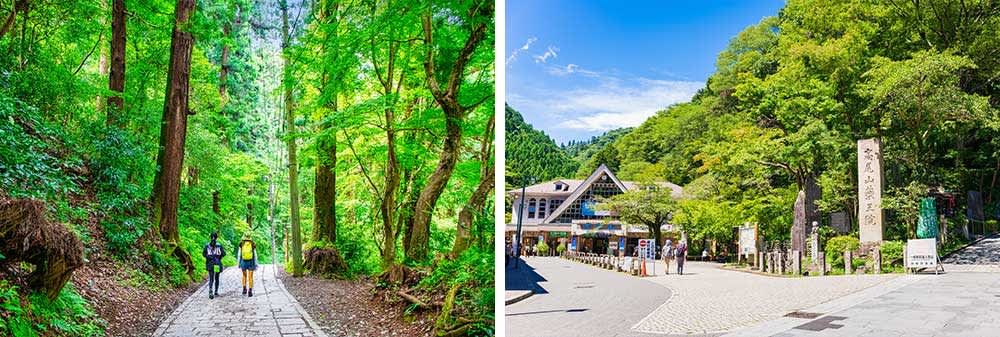
With its pristine beauty and easy access, Mount Takao is an ideal destination for those looking to escape the city’s hustle and immerse themselves in nature. There are various hiking trails available, such as the Omotesando (Trail No. 1), Kasumidai (Trail No. 2), Katsura Forest (Trail No. 3), and the Suspension Bridge (Trail No. 4), with Omotesando being the most popular choice, especially for beginners.

The Omotesando trail is about 3.8 km long, mostly paved with steps, allowing you to conquer the summit in just over an hour and a half. Along the way, you will pass by the Takao Monkey Park, where you can stop to observe monkeys climbing and playing. In addition to the beautiful natural scenery, there’s the ancient Takao Yakuoin Temple, which has over 1,300 years of history. This is one of the most important spiritual sites in the area, especially during autumn when the red leaves create a stunning scene.

On clear days, from the observation deck at the top of the mountain, you can enjoy panoramic views of Tokyo and the distant majestic Mount Fuji. Before finishing your hike, you can visit the Gokurakuyu Keio Takaosan hot springs near Takaosanguchi Station to relax after a long day of hiking.
Mount Takao is truly an unmissable hiking adventure for those looking to explore nature right in the heart of Tokyo’s urban area.
4. The Kumano Kodo Pilgrimage Route – Wakayama Prefecture
The Kumano Kodo pilgrimage route is one of the most sacred hiking trails in the world. The entire pilgrimage route is composed of seven different trails, and in 2024, it was recognized as a UNESCO World Heritage site along with the sacred mountains in the area. Today, visitors come to Kumano Kodo not only for a magical journey through nature but also to experience quiet moments and learn about Japan’s spiritual history.

The Kumano Kodo includes many different routes, each offering a unique experience. The most popular one is the Kumano Kodo Nakahechi route, which is about 105 km long and typically takes about six days to complete, depending on the walking speed and rest breaks. This is the main route leading to the three most famous sacred shrines in the area, collectively known as Kumano Sanzan: Kumano Nachi Taisha, Kumano Hongu Taisha, and Kumano Hayatama Taisha.
For beginners, you can choose to experience the section from Kumano Nachi Taisha Shrine to Kumano Hongu Taisha Shrine (about 33 km). Visitors can start their journey from Daimon-zaka Bus Stop and explore the surrounding area of Kumano Nachi Taisha Shrine. A highlight of this area is Nachi Falls (Nachi no Taki), Japan’s tallest waterfall at 133 meters. The water cascading down the steep rock face creates a breathtaking and impressive scene that captivates any observer.

Seigantoji Temple, near Kumano Nachi Taisha Shrine, stands out with its vibrant three-story red pagoda, offering a magnificent view of Nachi Falls and serving as an important stop on the pilgrimage route.


Along the way, if you want to experience the atmosphere of ancient pilgrims, visit the Daimonzaka-chaya rest stop. Here, visitors can rent traditional Heian period (794~1185 AD) costumes for photos and feel a part of the past. The rest stop offers a variety of costumes for men, women, and children, with staff ensuring they are worn correctly.
Midway along the route from Kumano Nachi Taisha to Kumano Hongu Taisha, Koguchi Village is a great place to stop overnight, where visitors can relax and recharge for the next leg of the journey.
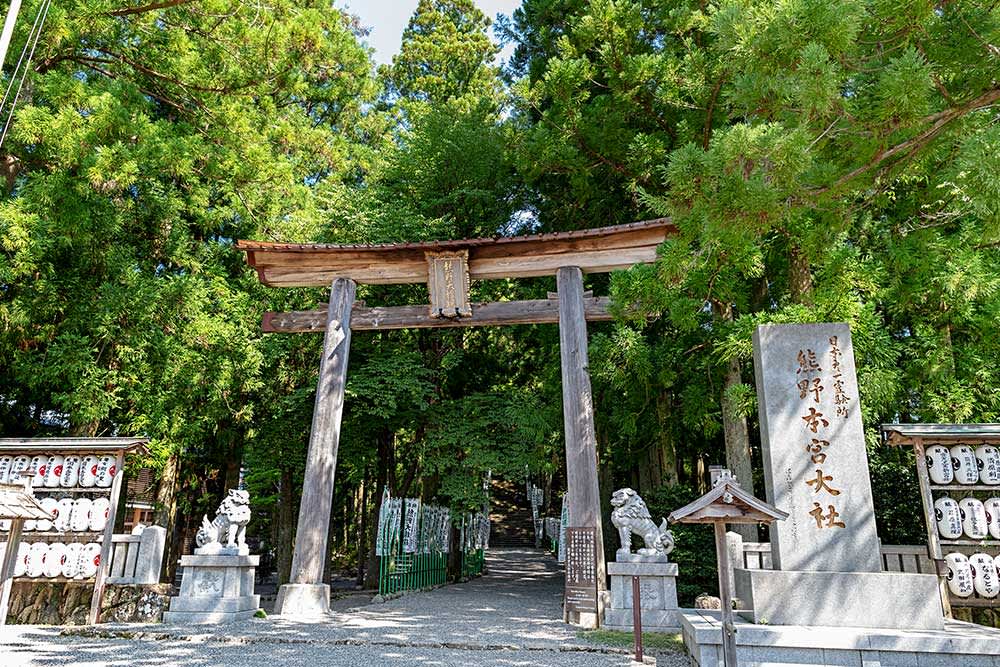
The pilgrimage route ends at Kumano Hongu Taisha Shrine, which exudes a solemn and sacred atmosphere, marking the completion of a memorable spiritual journey. This shrine, nestled among the rugged mountains of Wakayama Prefecture, impresses with its wooden structures and towering cedar and cypress trees. Kumano Hongu Taisha Shrine is not only the end of the pilgrimage route but also a symbol of the connection between people and the divine in Japan’s pilgrimage tradition.
The Kumano Kodo Nakahechi route is not only distinguished by its sacred sites but also by its stunning natural beauty. Visitors will admire ancient tea houses, lush cedar forests, and scenic viewpoints of Nachi Bay and the Kumano Sea, creating an unforgettable pilgrimage experience.
5. Hiking on Yakushima Island – Kagoshima Prefecture
Yakushima, an island located south of Kagoshima Prefecture, is a natural gem recognized as a UNESCO World Natural Heritage site. Famous for its primeval forests and diverse ecosystems, Yakushima is a paradise for nature explorers. Notably, it is also known for its ancient Yakusugi cedar trees, thousands of years old.

With a variety of hiking routes suitable for all levels, from easy to challenging, Yakushima is the perfect destination for hiking. Two of the most popular and beginner-friendly hiking areas are Yakusugi Land and Shiratani Unsuikyo Gorge.

Yakusugi Land is a vast natural park in the eastern part of Yakushima, named after the large number of yakusugi cedar trees that grow there. There are five hiking trails available, ranging from 30 minutes to 3.5 hours. The relatively flat and easy-to-walk trails lead visitors through the primeval forest, allowing them to admire thousand-year-old cedar trees and encounter wildlife like monkeys and deer.

Shiratani Unsuikyo Gorge is one of the most accessible natural parks on Yakushima Island, captivating visitors with its untouched beauty and fairy-tale-like scenery. It was also the inspiration for the famous animated film "Princess Mononoke" by Studio Ghibli.

Vivu together Min
Book a tour with Min Rakuten Travel
Fly with Min Rakuten Travel
Purchase travel tickets with Min Rakuten Travel
Choose a cozy stay with Min Rakuten Travel
Rent a self-drive car with Min Rakuten Travel
Cheap SIM from Rakuten Rakuten Mobile